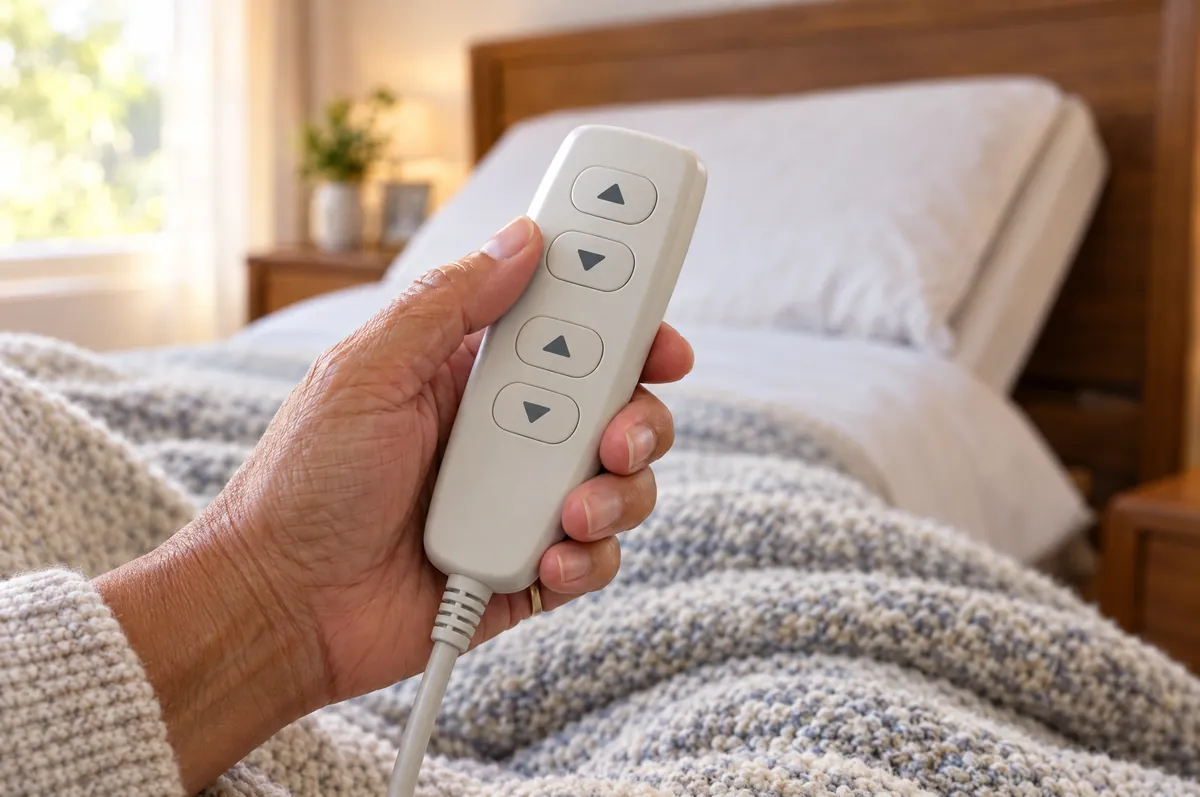
Most home hospital beds today are sold as either semi-electric or full-electric. The names sound technical, but the difference comes down to one thing: how the bed’s height changes.
Side-by-side comparison
| Semi-electric | Full-electric (total electric) | |
|---|---|---|
| Head section | Electric | Electric |
| Foot / knee section | Electric | Electric |
| Bed height | Manual hand crank | Electric |
| Who can adjust height | A caregiver, with effort | Anyone, with the hand control |
| Medicare | Covered if you qualify | Not covered; paid upgrade |
| Medicare monthly rental, months 1–3 (Oct 2026) | $66.21–$128.15 (E0260) | Not paid; CMS lists $184.01–$224.39 (E0265) |
| Implied purchase price (monthly × 10) | about $662–$1,282 | about $1,840–$2,244 |
| Best when | Height rarely needs to change | Height changes often for transfers and care |
Definitions from A52508; coverage from LCD L33820; amounts from the CMS DMEPOS fee schedule, October 2026, across the 50 states and D.C. The implied purchase price uses the federal rule that the first months’ rental equals 10% of the purchase price (42 CFR 414.229); it isn’t a retail price.
What is a semi-electric hospital bed?
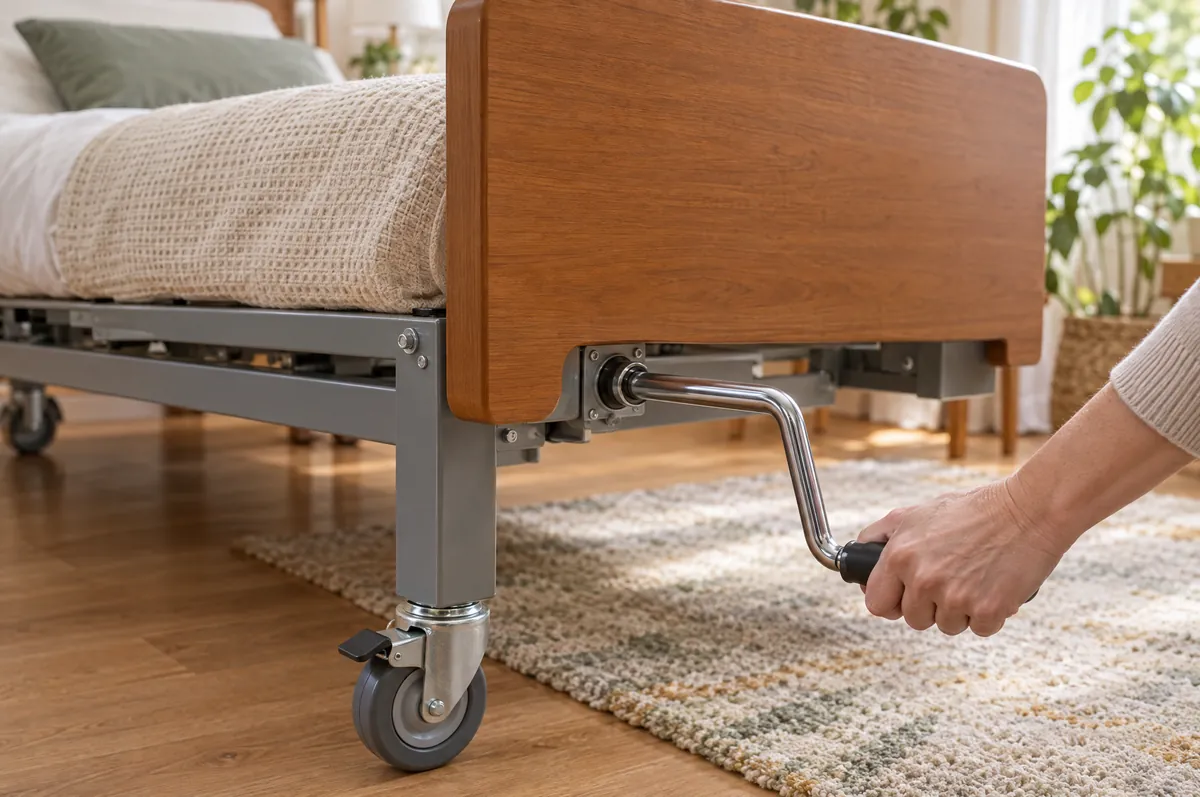
Medicare defines a semi-electric bed as one “with manual height adjustment and with electric head and leg elevation adjustments” (A52508). The person in bed can sit up or raise their knees with a hand control. To change the height, someone turns a crank, usually at the foot of the bed.
What is a full-electric hospital bed?
A total electric bed has “electric height adjustment and … electric head and leg elevation adjustments” (A52508). The whole bed rises and lowers with a button, typically on a corded hand control. Most furniture-style hi-low beds are full-electric.
Who benefits from powered height?
Powered height tends to matter most when:
- The person gets in and out of bed often, and a lower height makes standing or transferring to a chair or wheelchair easier.
- A caregiver helps with bathing, dressing, or repositioning and wants the bed at waist height, then low again afterward.
- Different people use the bed at different heights, such as several caregivers or visiting nurses.
- The person wants to adjust the height on their own.
A semi-electric bed can be enough when the height can be set once and left, for example if the person is mostly in bed or transfers with the bed at one height.
VA takes a different view from Medicare: its clinical recommendations for home beds found no medical indicators for providing a semi-electric over a full-electric bed, and say full-electric beds will be provided (VA).
What Medicare covers
- Semi-electric: covered if you meet one of Medicare’s basic criteria (such as positioning an ordinary bed can’t provide) and need frequent changes in body position or have an immediate need for a change in position (LCD L33820). See Medicare hospital bed requirements.
- Full-electric: not covered. The policy calls powered height “a convenience feature” and says total electric beds “will be denied as not reasonable and necessary” (LCD L33820).
How to get a full-electric bed through Medicare as an upgrade
Federal rules allow a beneficiary to choose an upgraded item after signing an ABN (42 CFR 414.229), and fully electric beds are always billed as upgrades (A52508). In practice:
- Your practitioner orders a hospital bed and documents that you meet the criteria for a covered type, such as semi-electric.
- A Medicare-enrolled supplier offers a full-electric bed as an upgrade and gives you an Advance Beneficiary Notice showing the extra cost.
- You sign it. Medicare pays toward the covered bed, and you pay the difference plus your usual deductible and coinsurance.
Some suppliers may provide an upgrade at no extra charge. Ask before delivery, and get the cost in writing.
Which should you choose?
| If… | Choose |
|---|---|
| You qualify for Medicare and want the lowest out-of-pocket cost | Semi-electric |
| Height will rarely change after setup | Semi-electric |
| Transfers happen several times a day, or a caregiver needs varied heights | Full-electric |
| The person wants to control everything themselves | Full-electric |
| You want a bed that looks like furniture | Full-electric furniture-style bed; see furniture-style beds |
Still deciding? Read types of hospital beds, compare costs in our cost guide, or see our picks for home use.
How we researched this guide
Definitions and coverage come from Medicare’s policy (A52508 and LCD L33820), amounts from CMS’s October 2026 fee schedule, upgrade rules from 42 CFR 414.229 and CMS’s ABN page, and VA’s clinical recommendations, all checked October 7, 2026.