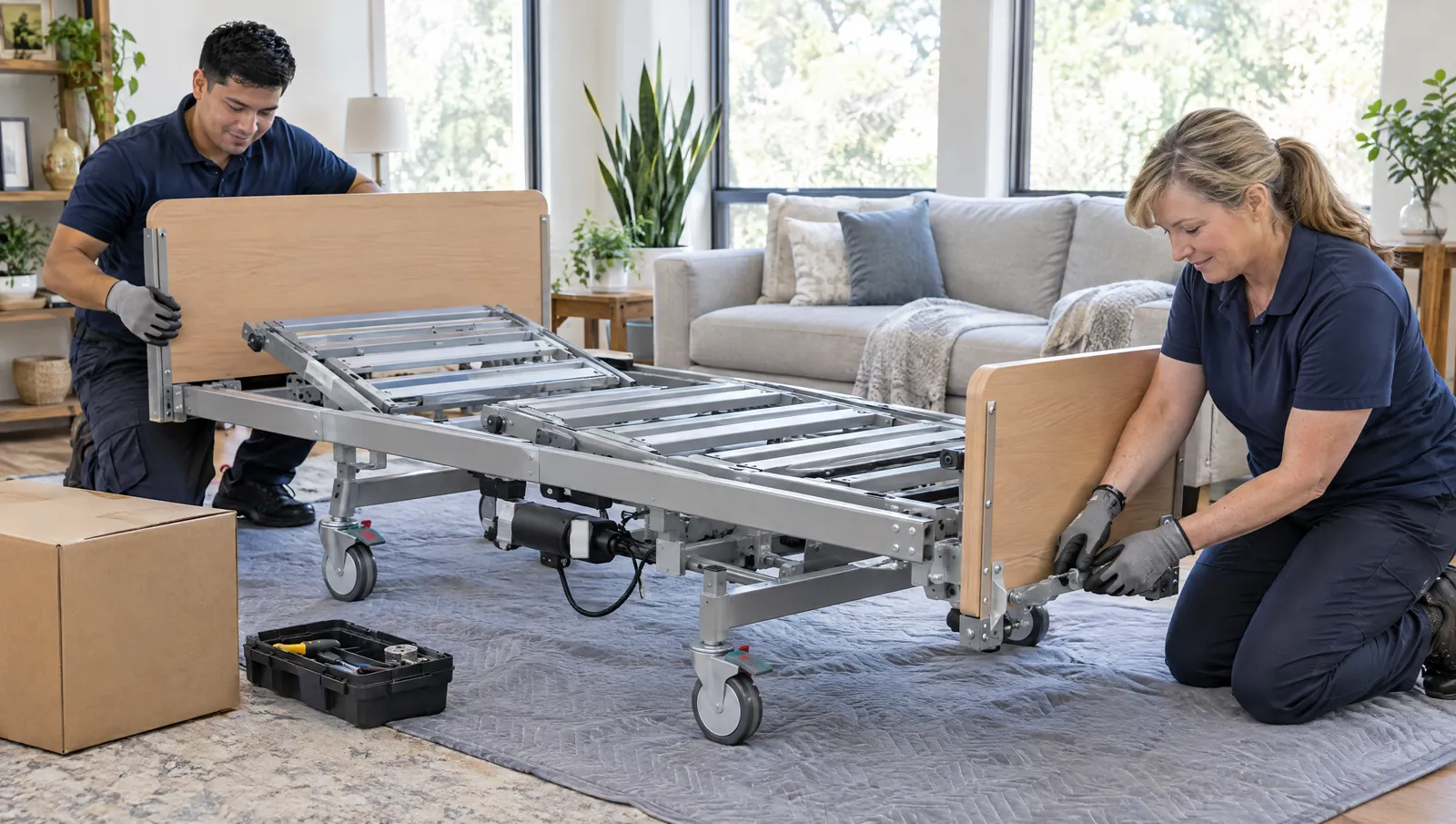
A used hospital bed can cost less than buying new, but only if it’s complete, clean, and set up safely. This guide covers where families usually look, what to check before you pay, how Medicare typically handles beds, and when renting or a free-program option is the better path. It’s general information; the care team should advise on fall and entrapment risk for the person who will use the bed.
Where people look for used beds
There is no single “best” marketplace. Families typically check:
| Source | What it’s like | Watch out for |
|---|---|---|
| DME dealers / refurbishers | Often inspect, replace worn parts, and may deliver and set up | Ask what’s included and what warranty, if any, they offer |
| Medical equipment loan closets | Sometimes sell or pass on surplus after a loan period | Beds may be incomplete; availability varies by community |
| Private marketplace listings | Garage-sale and online classified prices | You usually inspect, haul, and assemble yourself |
| State assistive technology (AT) reuse | Passes on equipment the original owner no longer needs | Not every program has hospital beds |
To find local loan closets and aging services, call the Eldercare Locator at 1-800-677-1116 and ask for your area agency on aging. For borrowing or reclaiming equipment rather than buying, see free and low-cost hospital beds.
Safety checklist before you buy
The FDA warns that bed rails, mattresses, and frames aren’t all interchangeable, and that gaps can trap a person (FDA). Between January 1, 1985, and January 1, 2013, the FDA received 901 reports of patients caught, trapped, entangled, or strangled in hospital beds, including 531 deaths; most were frail, elderly, or confused (FDA). Use that history as a reason to inspect carefully, not as a reason to panic over every used bed.
Work through this list with the bed in front of you when you can:
- Matching mattress and rails. The mattress should fit the deck snugly. Rails (if present) should be made for that frame, installed per the maker’s instructions, with no gap large enough to trap a head or body. Soft or compressed mattresses and toppers can widen gaps. See hospital bed rails and hospital bed safety.
- Entrapment gaps. Check openings within the rail, between the mattress and rail, between split rails, and at the head and foot. Change bed positions (head up, foot up, height change if available) and re-check.
- Motors, brakes, and pendant. Run every function through its full range with weight on the bed if possible. Lock every caster. Confirm the hand control and cord work and aren’t damaged.
- Recalls and hygiene. Get the brand and model number. Ask the seller about service history. Clean the frame thoroughly; treat a stained or odorous mattress as a replace-or-pass decision.
- Missing parts and the manual. Confirm side rails, mattress, pendant, power cord, and any trapeze or accessories you need. Take photos of labels. Ask for the owner’s manual or download it from the maker once you have the model.
If any of those fail and you can’t fix them with correct parts, walk away.
Prices: expect variation, not a single “average”
Used and refurbished prices vary by age, type (manual, semi-electric, full-electric, hi-low), completeness, local demand, and whether delivery is included. We don’t invent dollar figures here. For an official benchmark of what Medicare’s formula implies for a new basic bed with rails and mattress, see our hospital bed cost guide, which quotes CMS’s fee schedule language. Private used prices can be higher or lower than that benchmark and aren’t regulated the same way.
Medicare and used beds
Original Medicare covers qualifying hospital beds as capped rentals through Medicare-enrolled suppliers, not as a typical path for reimbursing a private used purchase (Medicare.gov; LCD L33820). If you may qualify, talk to a Medicare-enrolled supplier and read does Medicare cover hospital beds? before you buy a used bed yourself.
Other routes that often cost little or nothing for people who qualify—hospice equipment, Medicaid, VA, state AT reuse, loan closets—are covered in free and low-cost hospital beds.
When new or rental is safer
Prefer a complete rental or a carefully specified new system when:
- The care team says the person is at higher risk of entrapment or falls with rails.
- You can’t verify that the mattress and rails match the frame.
- Motors, brakes, or the pendant fail inspection.
- You need reliable delivery, setup, and service on a short timeline (for example, a hospital discharge date).
Compare renting and buying with local quotes in our hospital bed rental guide and the rent vs buy calculator. For bed types that suit fall risk, see types of hospital beds.
If you no longer need a bed you already have
If you’re clearing out a bed rather than shopping for one, see where to donate a hospital bed.
How we researched this guide
Safety facts come from FDA hospital bed and adult portable bed rail pages. Coverage framing comes from Medicare.gov and LCD L33820. Local-program pointers come from the Eldercare Locator (ACL). All checked October 12, 2026. This isn’t medical or insurance advice; confirm details with the care team and your plan.